


A Material of Controlled Reflections
In the world of jewelry, moissanite is prized for its exceptional brilliance, its hardness of 9.25 on the Mohs scale, and its ability to produce remarkably sharp and defined reflections.
Yet beyond its technical characteristics, what makes this gemstone particularly fascinating is its relationship with light. Unlike many other gems, moissanite generates intense and precise reflections that require an extremely careful control of the surrounding geometries and surfaces.
Because of this exacting nature, the final quality depends not only on the stone itself, but above all on the way it is integrated into the structure that holds it. This is where the art of stone setting comes into play.

The Essence of Stone Setting
In jewelry making, stone setting is one of the most complex and delicate crafts. It is not simply about securing a gemstone within a metal structure, but about creating a precise balance between proportions, stability, visual continuity, and light control.
Every detail influences the final result: the alignment of the stones, the spacing between surfaces, the consistency of the geometries, and the way light travels through the cuts. It is a process that requires technical sensitivity, manual expertise, and a deep understanding of materials.
Behind the apparent simplicity of a perfectly uniform surface lies an extraordinarily meticulous craft, where even the slightest variations can alter the overall harmony of the composition.

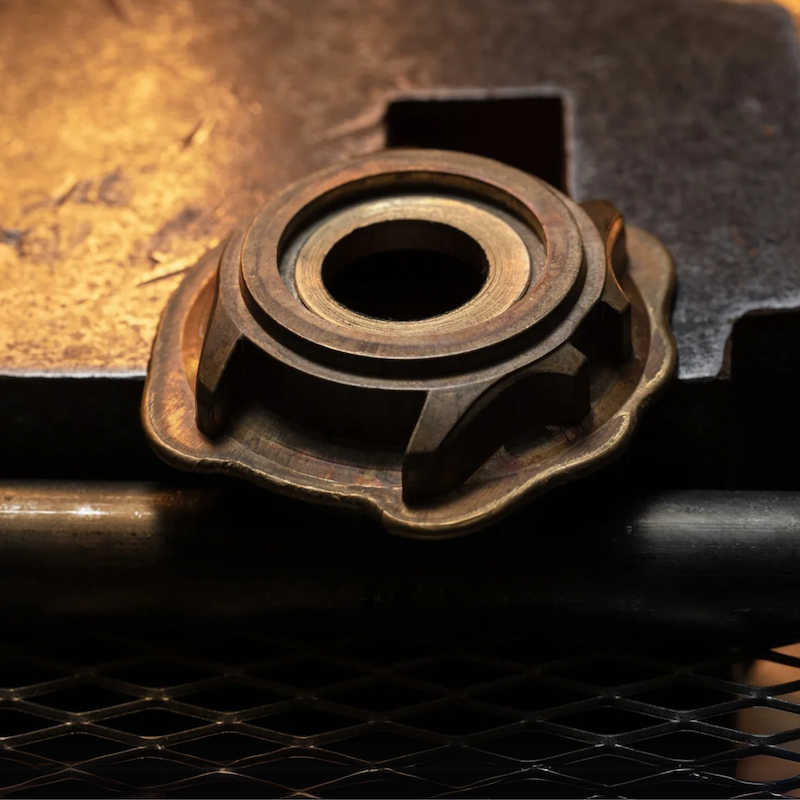
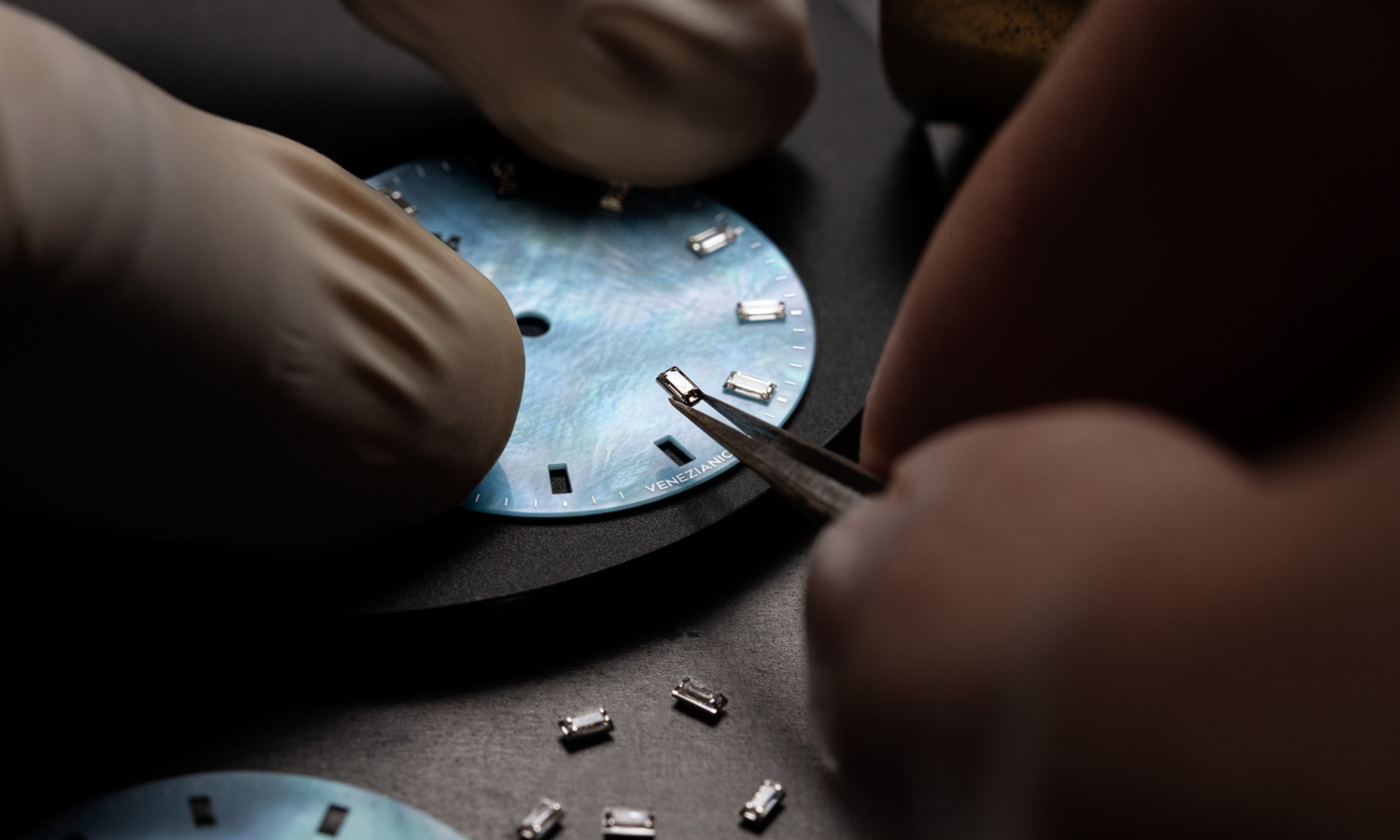
Development phases of Arsenale Moissanite inside the workshop of master goldsmith Davide Cestonaro.
Venice and the Culture of Light
Since ancient times, Venice has been one of the principal commercial crossroads between East and West. Precious stones, worked glass, and rare materials passed through the Serenissima along trade routes connecting the Mediterranean to Asia. Within such a context, deeply rooted in precious materials and decorative arts, a unique sensitivity toward surface craftsmanship, geometry, and reflections emerged.
Between water, stone, and glass, the perception of matter is constantly transformed. Reflections move across architecture, changing the way proportions and surfaces are observed. It is within this tradition, shaped by the territories of the Serenissima, that stone setting continued to evolve as one of the most sophisticated and refined disciplines of high jewelry.

Meeting Master Goldsmith Davide Cestonaro
What initially seemed like a simple visit from an enthusiast unexpectedly led to something far more stimulating. After entering our atelier to purchase a watch, a long conversation about construction details, geometries, and artisanal craftsmanship revealed the remarkable background of Davide Cestonaro, a master goldsmith from Vicenza with over forty years of experience in stone setting and precious gemstone craftsmanship.
From that conversation emerged the idea of developing a project capable of bringing together artisanal high jewelry and contemporary watchmaking, integrating decades of expertise, technique, and sensitivity developed through manual craftsmanship.
Together, we studied the proportions, geometries, and alignments required to integrate each stone into the metal structure while preserving the continuity and balance of the surface.

Arsenale Moissanite: Light, Geometry, and Continuity
From these considerations, Arsenale Moissanite was born, a project developed with the aim of integrating the art of stone setting into the architectural language of the Arsenale collection and our vision of watchmaking. For this model, we selected lab-grown baguette-cut moissanites, a shape distinguished by clean geometries, elongated surfaces, and linear reflections. It is a cut defined by rigor and precision, perfectly aligned with the essential lines and proportions of the Arsenale collection.

Precisely because of its geometric precision, the baguette cut demands extremely accurate alignment: even minimal deviations can disrupt the continuity, uniformity, and balance of the surface. The entire bezel development process focused on integrating the stones into the metal structure, carefully studying proportions, spacing, and geometries to preserve visual continuity and compositional harmony.
The same approach was applied to the dial indexes, which are also crafted in moissanite to maintain aesthetic consistency and material continuity between the dial and the bezel.
More than a decorative element, stone setting becomes an integral part of the watch's construction, helping define its surfaces, proportions, and visual identity.
For more information about Arsenale Moissanite, click the link below.