






Thank you for registering!
For centuries, Venice and Constantinople shared much more than a simple trade route. Merchants, artists, ambassadors, and ideas passed through the Bosphorus, helping shape the identity of two of the most influential civilizations in the Mediterranean. From Byzantine architecture to Ottoman decorative motifs, to the artistic exchanges that united East and West, the dialogue between these two cities continues today.
A limited edition of 1,000 pieces celebrating one of the Mediterranean's most fascinating cultural ties. 500 reserved for Turkey. 500 available for the rest of the world.
Price: 900€

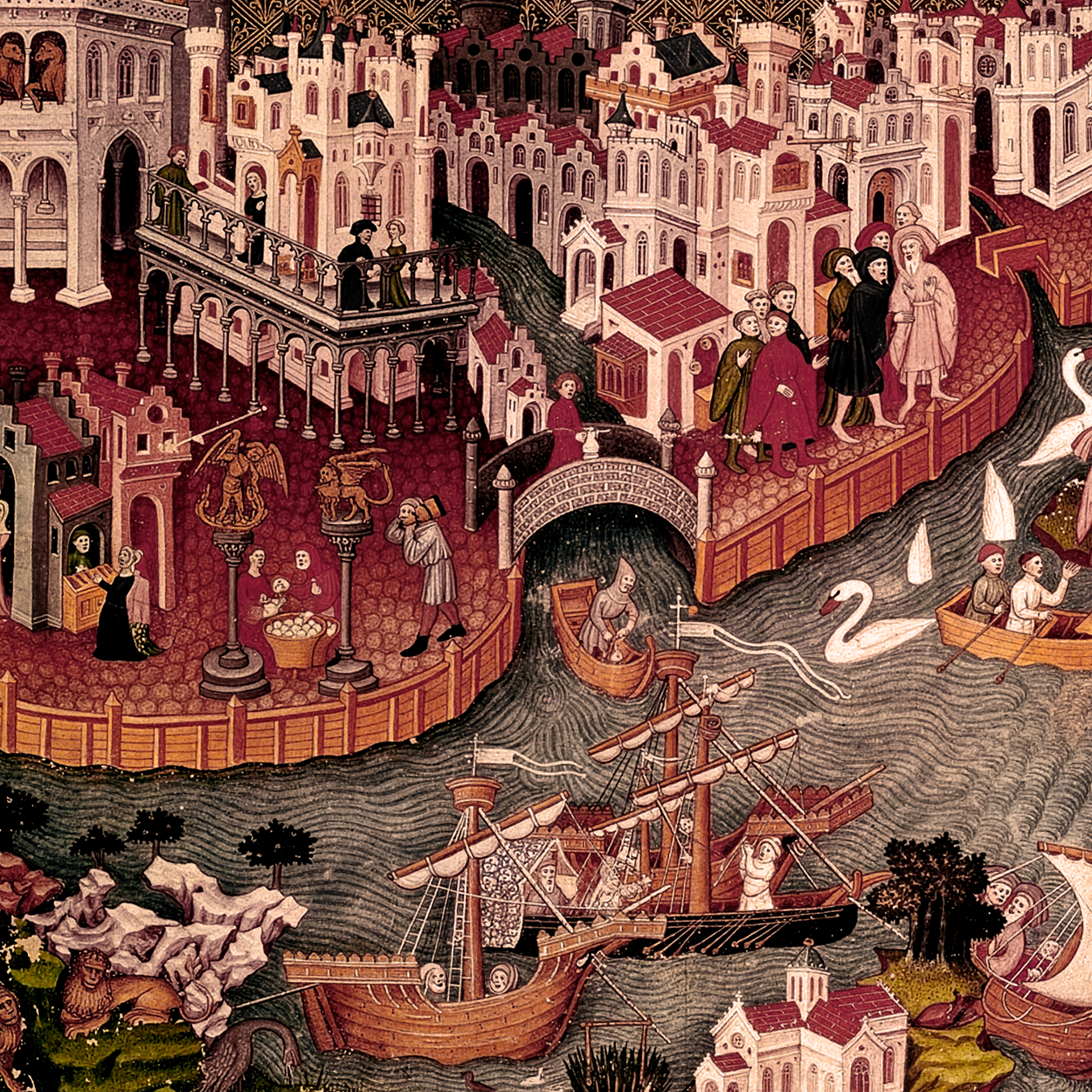
For centuries Venice and Constantinople have been among the most important meeting points in the Mediterranean. Located along the main trade routes of their time, they welcomed merchants, travelers and ambassadors from every part of the known world. Not only valuable goods circulated through these routes, but also ideas, knowledge and cultural influences. It was precisely this continuous dialogue that transformed two seaside cities into centers of extraordinary cultural vitality, destined to influence each other for centuries.
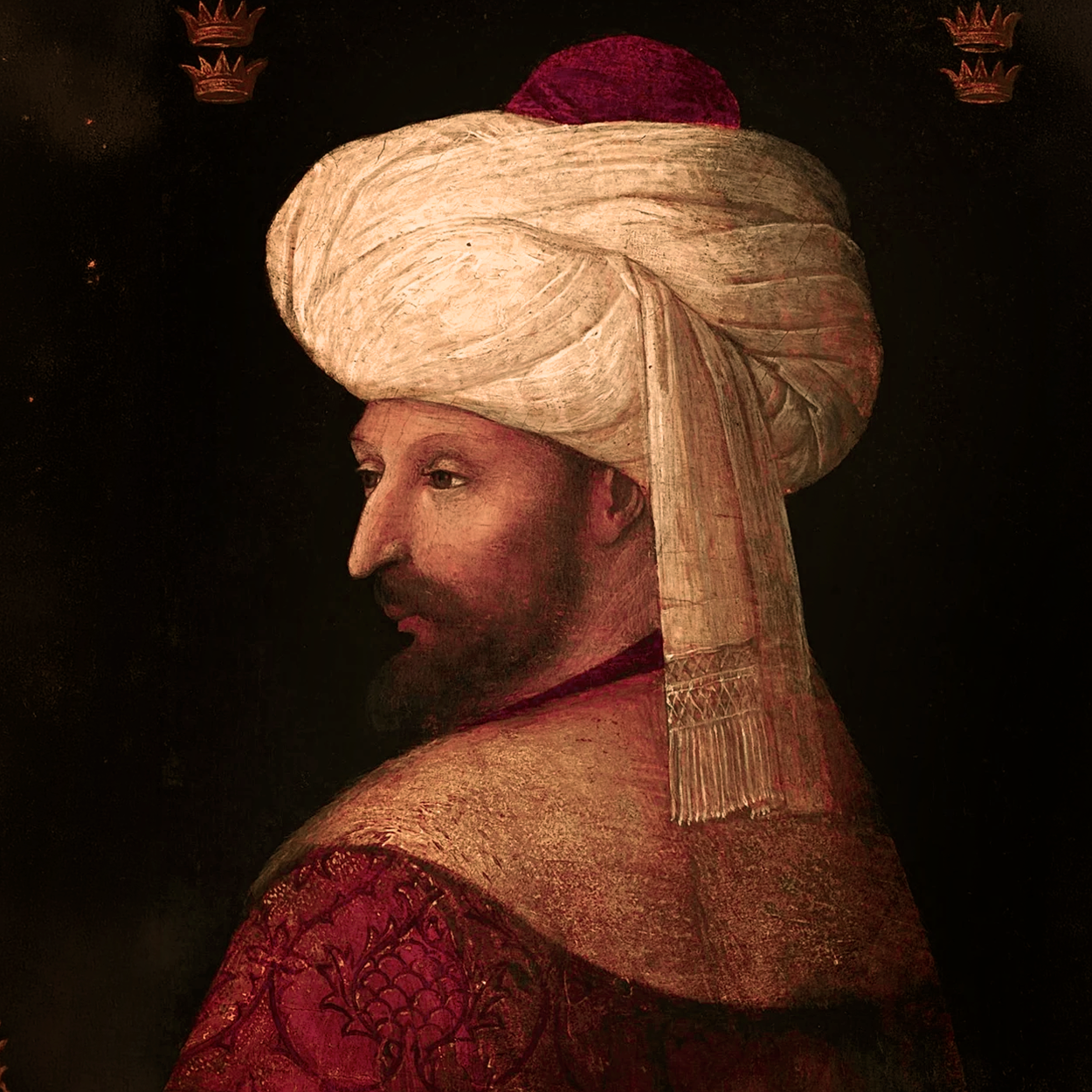
Among the numerous testimonies to this bond, none is more emblematic than Gentile Bellini's journey to the court of Sultan Mehmed II.
In 1479, a few years after the conquest of Constantinople, the Serenissima sent the Venetian master to the Ottoman capital as a symbol of a new dialogue between the two civilizations. His works reflected an encounter that went beyond trade, demonstrating how art and culture could build bridges where the sea separated the lands.
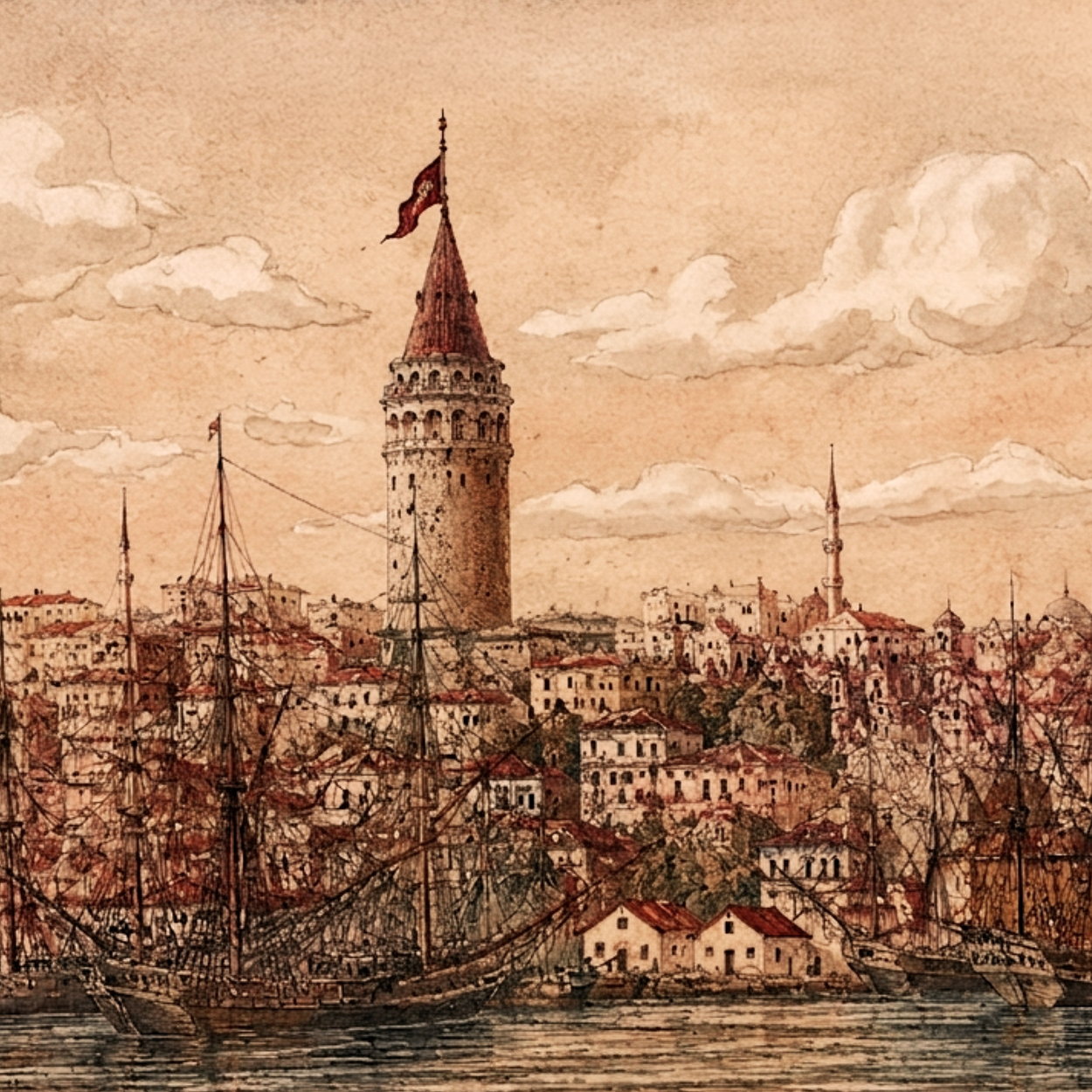
That dialogue found its most concrete expression in the Galata neighborhood. Overlooking the Golden Horn, this historic district was home to Venetian merchants, diplomats, and communities for centuries, becoming one of the main points of contact between the Serenissima and Constantinople. Trade, languages, and traditions from across the Mediterranean intertwined in its ports and streets. Even today, Galata represents one of the most tangible testimonies to the bond that united Venice and the Bosphorus, transforming the exchange between two worlds into a shared history.
For centuries Venice and Constantinople have been among the most important meeting points in the Mediterranean. Located along the main trade routes of their time, they welcomed merchants, travelers and ambassadors from every part of the known world. Not only valuable goods circulated through these routes, but also ideas, knowledge and cultural influences. It was precisely this continuous dialogue that transformed two seaside cities into centers of extraordinary cultural vitality, destined to influence each other for centuries.
Among the numerous testimonies to this bond, none is more emblematic than Gentile Bellini's journey to the court of Sultan Mehmed II.
In 1479, a few years after the conquest of Constantinople, the Serenissima sent the Venetian master to the Ottoman capital as a symbol of a new dialogue between the two civilizations. His works reflected an encounter that went beyond trade, demonstrating how art and culture could build bridges where the sea separated the lands.
That dialogue found its most concrete expression in the Galata neighborhood. Overlooking the Golden Horn, this historic district was home to Venetian merchants, diplomats, and communities for centuries, becoming one of the main points of contact between the Serenissima and Constantinople. Trade, languages, and traditions from across the Mediterranean intertwined in its ports and streets. Even today, Galata represents one of the most tangible testimonies to the bond that united Venice and the Bosphorus, transforming the exchange between two worlds into a shared history.

Mirrored Architecture: The Orient in Venice
Long before Venice and Constantinople were linked by diplomatic and trade relations, they were already united by a shared visual heritage. Ornamental motifs, plays of light, mosaics, and architectural decorations spread along the Mediterranean routes, helping to shape the aesthetics of both cities.
From this fusion, an artistic language was born, capable of crossing centuries and borders. Arsenale Bosphorus pays homage to this shared history, reinterpreting its forms and influences in a contemporary key.

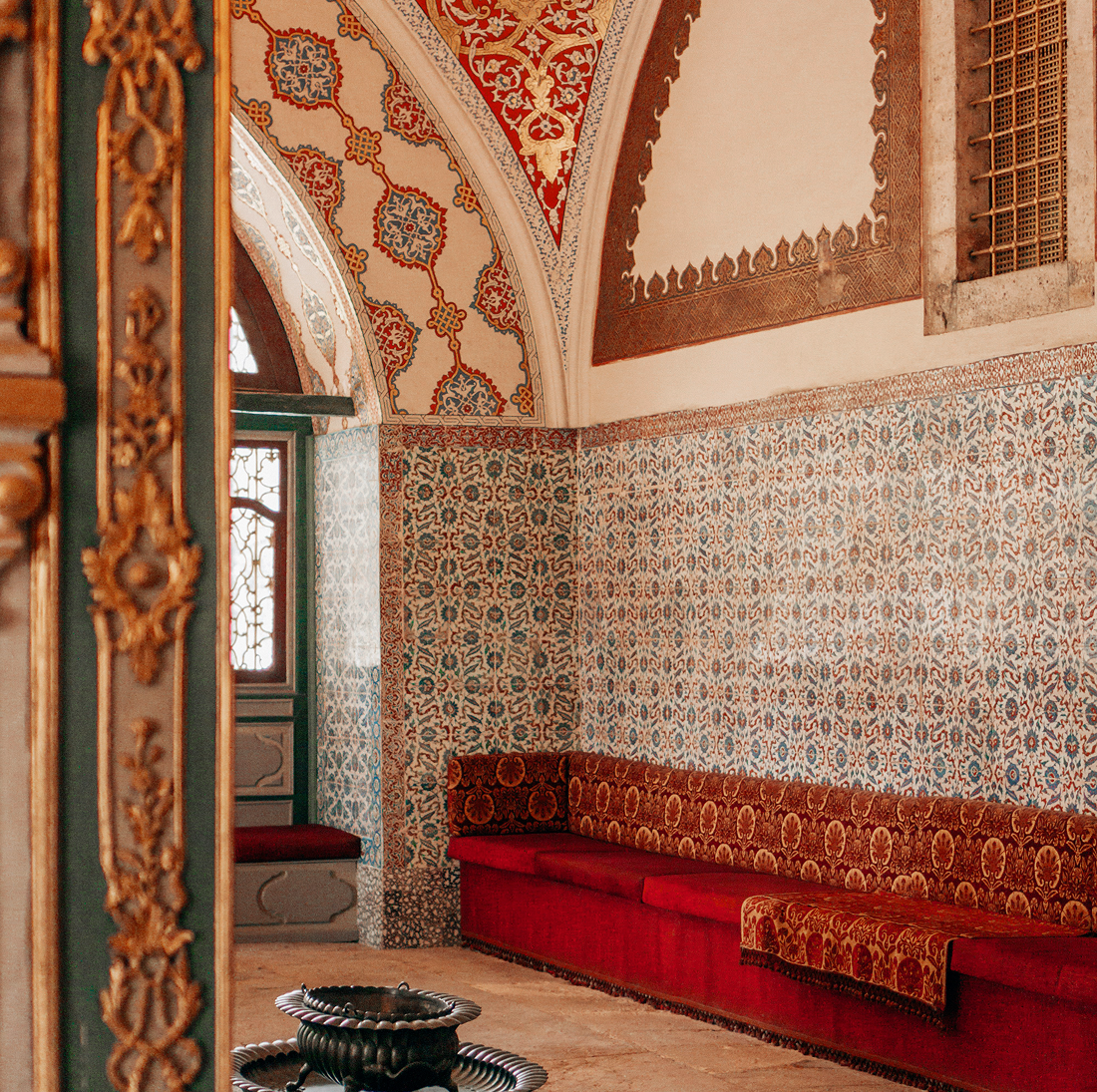
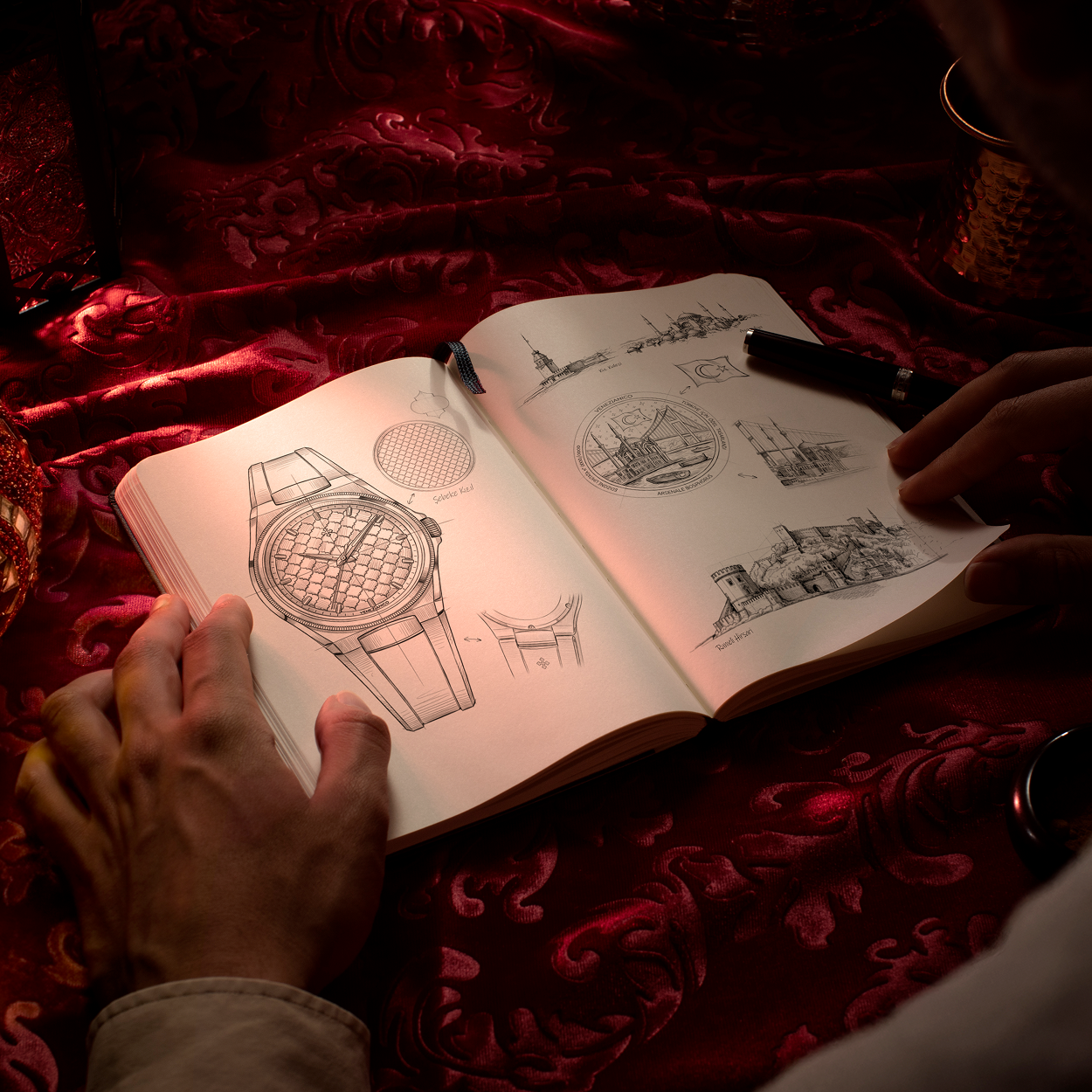
The Arsenale Bosphorus dial is born from a reinterpretation of several ornamental motifs that have characterized Ottoman art for centuries. Its pattern is inspired by the quatrefoil, a four-lobed motif widely used in Iznik ceramics, court textiles, and architectural decorations that adorned Constantinople between the 15th and 17th centuries. Through the modular repetition of this form, Ottoman artisans transformed geometry into a visual language of harmony, balance, and continuity. Arsenale Bosphorus embraces this legacy and reinterprets it in a contemporary key, transforming an ancient decorative motif into a pattern that still conveys the dialogue between Venice and Constantinople today.

To give shape to this design, the dial is crafted while the mother-of-pearl is still raw, before the subsequent coloring and finishing stages. Through high-precision CNC machining, a diamond-tipped tip engraves the surface, faithfully following the ornamental motif inspired by Ottoman art. Each groove is made with minimal tolerances to preserve the continuity of the design and enhance the natural characteristics of the mother-of-pearl. It is at this stage that the dial acquires its three-dimensional architecture, an invisible structure that will only fully emerge in subsequent processes.

After engraving, the dial undergoes a series of processes that enhance its depth and character. The intense red color combines with the previously sculpted structure, allowing light to interact with the mother-of-pearl in ever-changing ways. The encounter between the geometric engravings and the material's natural iridescence generates a continuous play of reflections, shadows, and chromatic variations. The result is a living and dynamic surface, in which the ornamental motif does not appear printed, but seems to emerge from within the dial, transforming with every change of perspective.
The Arsenale Bosphorus dial is born from a reinterpretation of several ornamental motifs that have characterized Ottoman art for centuries. Its pattern is inspired by the quatrefoil, a four-lobed motif widely used in Iznik ceramics, court textiles, and architectural decorations that adorned Constantinople between the 15th and 17th centuries. Through the modular repetition of this form, Ottoman artisans transformed geometry into a visual language of harmony, balance, and continuity. Arsenale Bosphorus embraces this legacy and reinterprets it in a contemporary key, transforming an ancient decorative motif into a pattern that still conveys the dialogue between Venice and Constantinople today.
To give shape to this design, the dial is crafted while the mother-of-pearl is still raw, before the subsequent coloring and finishing stages. Through high-precision CNC machining, a diamond-tipped tip engraves the surface, faithfully following the ornamental motif inspired by Ottoman art. Each groove is made with minimal tolerances to preserve the continuity of the design and enhance the natural characteristics of the mother-of-pearl. It is at this stage that the dial acquires its three-dimensional architecture, an invisible structure that will only fully emerge in subsequent processes.
After engraving, the dial undergoes a series of processes that enhance its depth and character. The intense red color combines with the previously sculpted structure, allowing light to interact with the mother-of-pearl in ever-changing ways. The encounter between the geometric engravings and the material's natural iridescence generates a continuous play of reflections, shadows, and chromatic variations. The result is a living and dynamic surface, in which the ornamental motif does not appear printed, but seems to emerge from within the dial, transforming with every change of perspective.

Technical details
Ø40 mm, lug-to-lug 44 mm, total thickness 9.95 mm
316L Stainless Steel
Natural red mother-of-pearl, diamond-cut and decorated with a geometric pattern inspired by Ottoman art
Sapphire with anti-reflective coating
Miyota 9039, automatic, 3-hands, no date
Swiss-Made BGW9 Super-LumiNova®
Screwed
Engraved, fixed with six screws
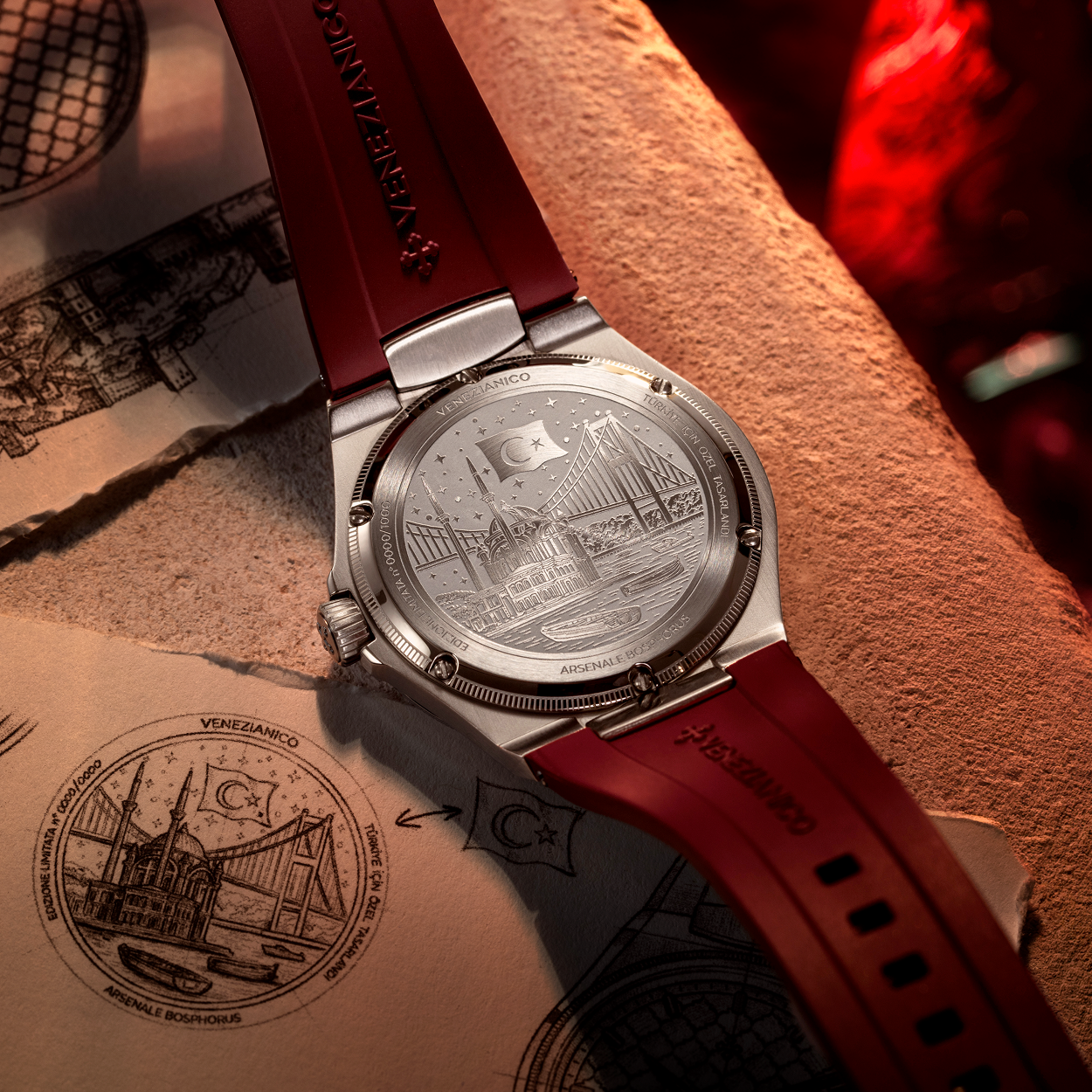
The caseback celebrates one of Turkey's most iconic views. At the center of the composition is the Ortaköy Mosque, directly overlooking the waters of the Bosphorus, while in the background stands the 15th of July Martyrs' Bridge, a symbol of contemporary Istanbul. The scene is completed by the Turkish flag waving above the landscape and the boats crossing the strait, recalling the Bosphorus's historical role as a meeting point between continents, cultures, and civilizations. The engraving ideally represents the dialogue between past and present, between the legacy of Constantinople and the vitality of modern Istanbul.
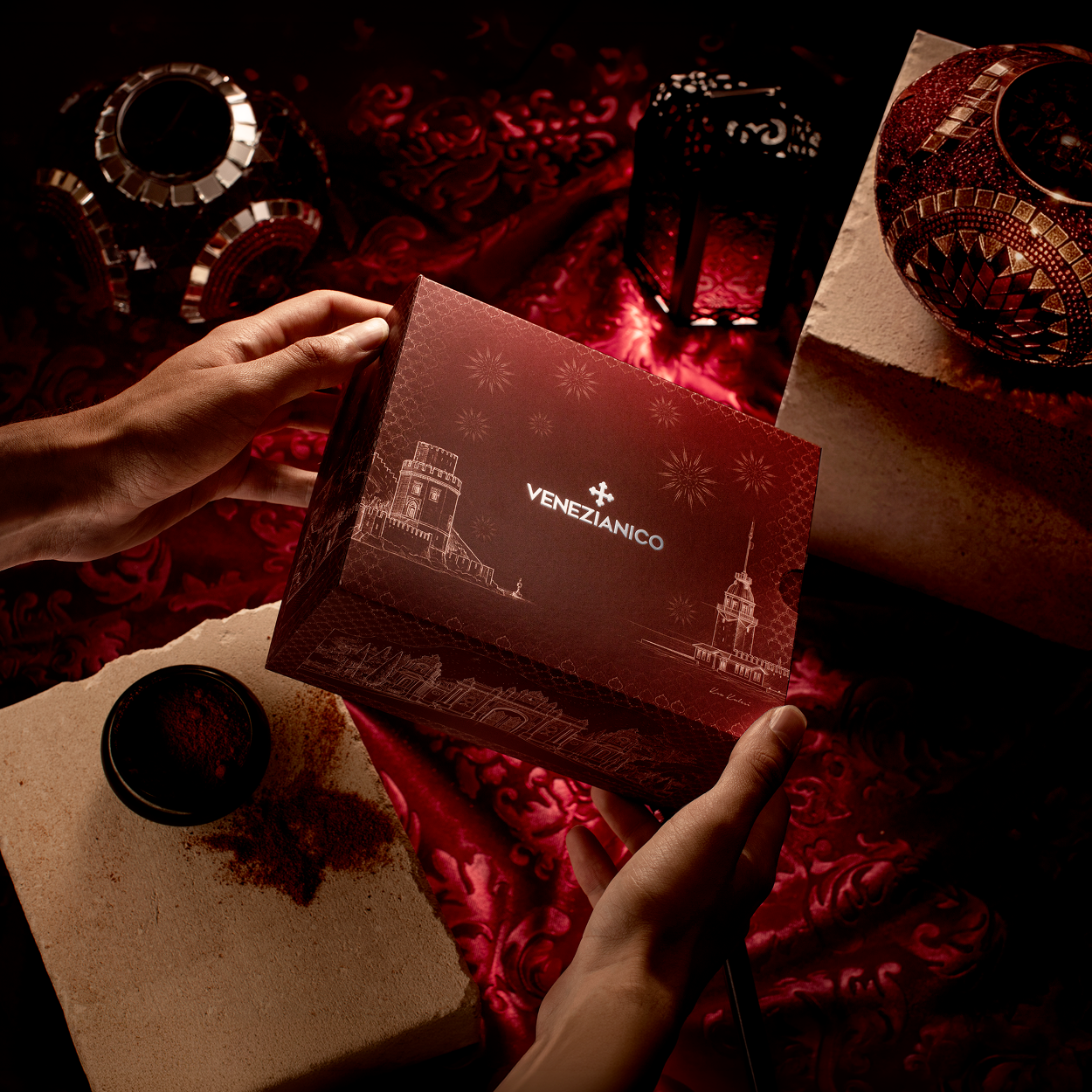
The Arsenale Bosphorus sleeve is designed as an illustrated travelogue. Monuments, landscapes, and symbols of Turkish culture intertwine in a composition that accompanies the collector on a journey through the Bosphorus, Anatolia, and some of the country's most iconic landmarks. On the back, a dedicated map completes this visual narrative, transforming the packaging into a tribute to Turkey's history, geography, and identity.
The caseback celebrates one of Turkey's most iconic views. At the center of the composition is the Ortaköy Mosque, directly overlooking the waters of the Bosphorus, while in the background stands the 15th of July Martyrs' Bridge, a symbol of contemporary Istanbul. The scene is completed by the Turkish flag waving above the landscape and the boats crossing the strait, recalling the Bosphorus's historical role as a meeting point between continents, cultures, and civilizations. The engraving ideally represents the dialogue between past and present, between the legacy of Constantinople and the vitality of modern Istanbul.
The Arsenale Bosphorus sleeve is designed as an illustrated travelogue. Monuments, landscapes, and symbols of Turkish culture intertwine in a composition that accompanies the collector on a journey through the Bosphorus, Anatolia, and some of the country's most iconic landmarks. On the back, a dedicated map completes this visual narrative, transforming the packaging into a tribute to Turkey's history, geography, and identity.


